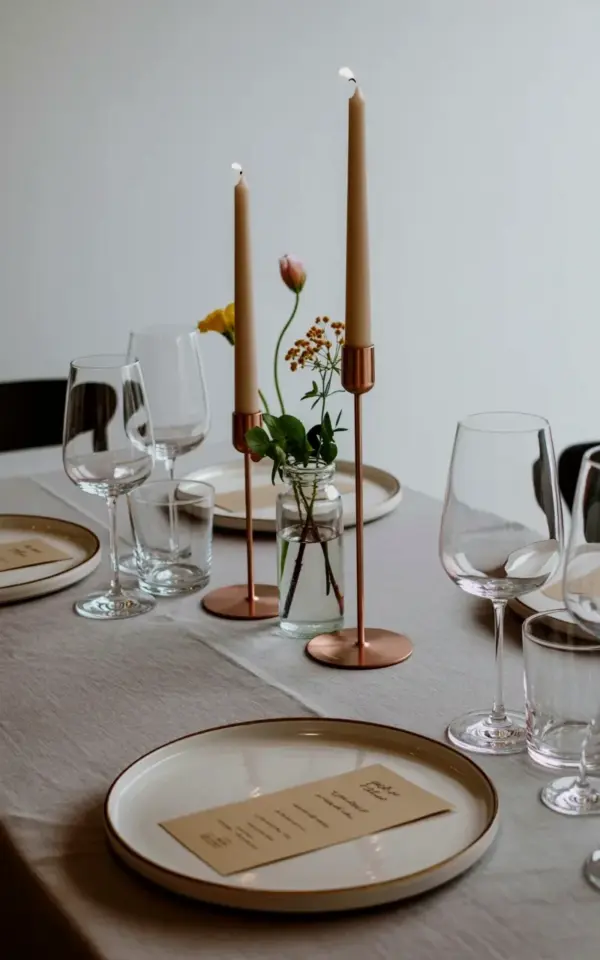
You’re staring at a light gray linen tablecloth, two tall copper candlesticks holding slim beige candles, and a few tiny glass vases with yellow and pink flowers. That’s the whole table. No runner, no chargers, no pile of silverware wrapped in napkin rings. This is what a minimalist table setting looks like, and it’s harder than it seems. The mistake most people make is thinking minimal means “less effort.” It doesn’t. It means editing with intention, and honestly, that’s a skill you can build in one dinner, not a talent you’re born with.
The Biggest Mistake: Overcrowding the Table
Look, I’ve been to dinner parties where the centerpiece took up so much space that we couldn’t see each other. A minimalist table setting isn’t about having nothing. It’s about having only what matters, and that means killing your darlings. You don’t need a giant arrangement, three types of candles, and a sculpture. You need a few anchors.
Here’s the thing: if you can’t see the person across from you, the table is too full. Start with just your base cloth, two candlesticks, and a handful of small vases. Then step back. Add something only if the table feels empty, not just because you have a cute napkin holder.
- One tablecloth, not a tablecloth plus a runner plus placemats.
- Two candlesticks, not six. Tall copper ones work like vertical punctuation.
- Three to five small vases, never a giant bouquet.
Start With a Neutral Base: Table Linen Done Right
The light gray linen tablecloth in that photo isn’t accidental. Gray is a quiet neutral that makes copper and cream look expensive, but it also forgives spills better than white. If you’re buying a cloth for this, choose a textured linen, not a shiny polyester blend. Wrinkles are fine. Honest, they add a sort of relaxed confidence that a perfectly ironed table can’t fake.
One mistake people make is choosing a patterned cloth and then wondering why the flowers feel busy. The cloth should be background, not content. A solid, slightly rumpled linen lets your candlesticks and small vases do the talking. And if you’re worried about stains, buy a gray or beige tone that hides the evidence. That’s not cheating. That’s being smart.
Candle Placement: The Heart of a Candlelit Dinner
For a candlelit dinner, placement matters more than the candle itself. Those tall copper candlesticks with slim beige tapers? They frame the flowers without blocking your guests’ faces. The rule is simple: keep the flame below or above eye level. Nobody wants to spend the night leaning sideways to see their friend.
Put the candlesticks down the center of the table, but stagger them slightly. One near the top end, one near the bottom end. Don’t line them up like soldiers. The little offset makes the table feel lived in, not staged. And use unscented candles. Trust me, a “pumpkin spice” taper smells lovely in the jar but ruins your dinner, because all your food suddenly tastes like a fall candle aisle.
Flowers That Don’t Fight For Attention
Seasonal flowers in small glass vases are the quiet stars of a minimal table. The photo uses delicate yellow and pink blooms with green leaves, which sounds simple, but it works because the vases are short. If your flowers tower over the table, they block conversation. Keep everything below the chin line of your seated guests.
Here’s a weird thing I’ve learned: grouping three small bud vases in a loose triangle looks more intentional than one medium vase. You get the same visual weight, but it feels airier. Use flowers with thin stems and small heads, like ranunculus, daisies, or even wildflowers. You don’t need a florist. Just trim the stems short enough that each vase holds one to three stems and some greenery. That’s it.
Place Settings and Personal Notes: Function Meets Feeling
A cream ceramic plate with a thin brown rim is exactly the kind of piece that anchors a place setting. It’s not stark white, it’s not patterned. It just sits there being warm. On top of each plate, a small handwritten-style note card gives the table a personal touch that takes minutes but changes the entire mood.
You don’t need fancy calligraphy. Write “Thank you for being here,” or your menu, or a quote from the recipe. Use a simple card and a pen. The imperfect handwriting is what makes it feel real, which is the whole point. And if you have guests who don’t know each other? The note can be a conversation starter, like a fun fact about the dish they’re about to eat.
The Glasses and Cutlery Trap
The photo shows multiple empty wine glasses and water glasses around each place setting. That’s normal for a dinner party, but it’s also where people overdo it. You don’t need four glasses for a three-course meal. Set a water glass and one wine glass per person, unless you’re serving both red and white. That’s plenty. Minimalism applies to your drinking vessels too.
As for cutlery, one fork, one knife, one spoon is enough for most dinners. If you’re serving soup, add a soup spoon. If you’re having salad, add a salad fork. But don’t set the table as if you’re expecting a royal inspection. Extra forks just create clutter, and clutter is the enemy of that effortless look. Also, don’t wrap napkins in rings unless the rings actually mean something. Just fold them and set them on the plate or beside the fork.
A Simple Timeline for Setting the Table Without Stress
Set the linen cloth first, but don’t fuss over it. Spread it, pull it even, and walk away. Then place the candlesticks and vases down the center, step back, and adjust. After that, set the plates, with a note card on each one. Add the glasses last, because they’re the easiest to knock over if you’re reaching across the table.
Give yourself fifteen minutes rather than two hours. Rushing makes you add stuff. That’s a pattern I’ve noticed in my own kitchen: when I’m anxious, I throw on extra props. So start earlier, and then just stop. The table doesn’t need to be perfect. It needs to be done. A quick check at arm’s length is enough. If it looks calm from the doorway, you’re good.
Wrapping Up Without Overthinking
A minimalist table setting is a decision to trust the details you’ve chosen. The gray linen, the copper candles, the tiny flowers, the cream plates, the note cards. Nothing wasted, nothing shouting for attention. Just a warm, intentional table that lets the people and the food be the main event. Next time you’re setting up for a dinner party, try cutting one thing. Move the candlesticks. Write the notes. See how much easier the whole evening feels. And if you love this look, save it on Pinterest so you can find these ideas again before your next gathering.
This post was researched and drafted with AI assistance, then personally reviewed and edited by Fern before publishing.
Leave a Comment