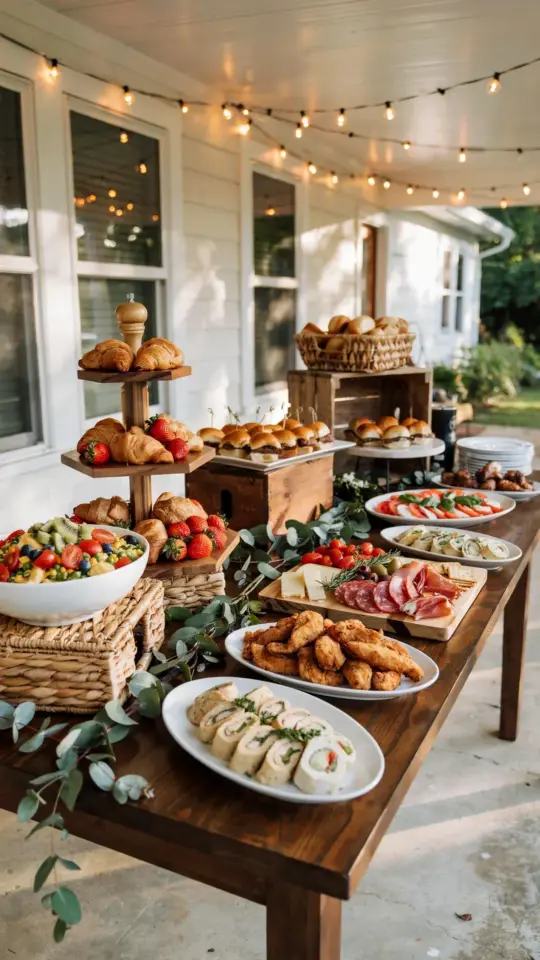
Look, I love a good tablescape as much as anyone, but I don’t love spending an hour arranging flowers and folding napkins into origami. A casual tablescape for a spring brunch should feel relaxed, not like a photo shoot. This particular setup takes me exactly ten minutes, honestly, and I’ve learned the hard way where most people get stuck. The good news? Once you avoid the common mistakes, you’ll have time to actually sip your coffee before guests arrive.
The Biggest Tablescape Mistake: Making It Too Tall
I once went to a brunch where the centerpiece was a huge vase of lilacs taller than my head. I spent the entire meal leaning sideways to see my friend across the table. Nobody wants that.
You want a low centerpiece. A shallow bowl or a small vase with a few stems works perfectly. Keep it below eye level when you’re sitting down. The rule is simple: if you can’t see the person across from you, the centerpiece is too tall.
And if you’re constantly moving your plate around it, same problem. Just cut the stems. Honestly, it takes one minute and saves everyone from neck strain.
A Brunch Table Centerpiece That Lets People Talk
For my last spring brunch, I cut a few branches of apple blossom from my backyard and stuck them in a low ceramic pitcher. It took two minutes. No floral foam, no tape grid, no nonsense.
The flowers don’t need to be fancy. A bunch of grocery store tulips in a mason jar works great. What matters is that they don’t block sightlines.
Here’s the trick: place the centerpiece slightly off to one side, not dead center. That way, there’s room for the serving bowls and the food. And people can actually reach each other’s hands for the salt.
I have this weird habit of buying flowers at the farmer’s market and then leaving them in the car until the last possible second. So by the time I’m setting the table, I’m basically doing surgery on wilted stems. That’s why I started keeping a few fake stems in a jar in the pantry. Not gonna lie. They’re ugly, but in an emergency they look fine from across the table.
Spring Brunch Plates: Why Matching Is Overrated
You don’t need a full set of matching dishes. Really. Vintage plates with different patterns can look amazing together if you keep one thing consistent: color tone.
Try sticking to cream, pale pink, and sage green. Or pair all white plates with a single patterned salad plate on top. My grandmother left me a mismatched stack of floral china, and I use it every time. Some plates have tiny chips on the edge, and I love that. It feels like a story.
The mistake is trying to make them look too perfect. If you arrange them in a neat stack, they look fine. If you stress about which pattern goes where, you’ll waste ten minutes just standing there.
Vintage Tablesettings: How to Mix Old Plates Without Chaos
Ok so, vintage tablesettings can go wrong fast when everything has a different texture. A ruffled plate next to a geometric plate next to a scalloped plate. That’s a lot.
Instead, pick one base plate for everyone and layer one vintage piece on top. Or go the other way: match the dinner plate, let the salad plates be wild. That gives you a collected look without the visual noise.
I also like to stack two plates at each seat. It means less time running back to the kitchen for
This post was researched and drafted with AI assistance, then personally reviewed and edited by Fern before publishing.
Leave a Comment