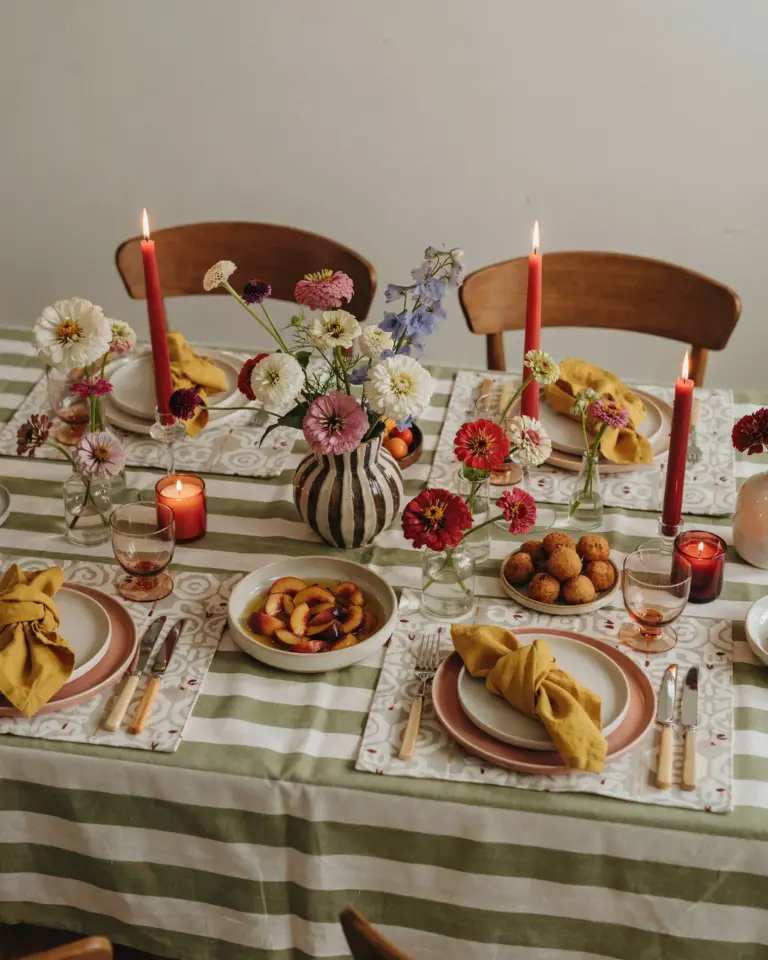
Why Your Spring Table Needs More Than Just Flowers
If you search for a spring tablescape online, you will see a lot of pictures where someone spent $200 on peonies and called it a day. That is fine if you have peony money. Most of us do not. I put this guide together because I think a beautiful table should start with what you already own, not what you have to buy. The real trick for a spring tablescape is making each piece do double duty. A simple linen napkin works as a place setting, a casual runner, or even a wrap for a small vase. And you do not need a dozen different items. Four or five well chosen pieces, arranged with a little thought, can do more than a table full of clutter.
This approach also saves you time. You can set the whole thing in under fifteen minutes if you keep the pieces simple. And your guests will notice the calm, not the cost.
Three Budget Friendly Flowers That Look Expensive
For a spring tablescape, the flowers are the star. But you do not need a florist. I have three reliable picks that cost under ten bucks a bunch and still look like you tried hard. First, spray roses. They open slowly, last a week, and come in pale blush, cream, or soft yellow. Second, freesia. It smells like spring and the stems have a natural curve that adds movement. Third, eucalyptus branches. They are cheap, they fill space, and they make any arrangement look intentional.
Mix two of these together and you have a centerpiece that looks custom. Stick to one color family for a more polished look. If you want a pop, add one stem of something bright like tulips or ranunculus. That single stem will draw the eye without overwhelming your budget.
How to Layer Linens Without Losing Your Mind
Linens are where people overthink. You do not need a full tablecloth, a runner, placemats, and napkins all at once. That is a lot of laundry for one dinner. Instead, pick two layers. A neutral cotton or linen runner down the center of the table gives structure. Then use cloth napkins at each setting. Fold them simply. A basic rectangle fold or a loose knot works better than a complicated origami swan.
If you want a third layer, add a small placemat in a contrasting texture like jute or woven seagrass. That adds visual interest without adding cost. The key (sorry, I know that phrase is overused, but it fits here) is contrast, not matchy matchy. Mix a smooth linen napkin with a rough natural placemat and your spring tablescape instantly feels layered and rich.
- Stick to two layers: runner plus napkins, or placemats plus napkins. Three only if you already own them.
- Use neutral tones: cream, oatmeal, soft gray, or pale blush. They work with any flower color.
- Skip the ironing: A light steam with a handheld steamer takes two minutes. Wrinkles in linen actually look relaxed and intentional.
The Neutral Plate Trick That Works Every Time
I own one set of dinner plates. They are cream colored with a slight rim. That is it. I have used them for every spring tablescape for the last four years. Neutral plates are the single most versatile tool in your table decor arsenal. They disappear into the background, which means your flowers and linens get to shine. And they never clash with anything.
If you are starting from scratch, look for plain white or cream stoneware at a home goods store or thrift shop. You do not need a full set of twelve. Six matching plates plus a mix of salad plates that are similar in tone will do the job. The trick is keeping the color palette tight. When all the plates live in the same neutral family, the table feels cohesive even if the shapes are slightly different.
This also means you can swap out your centerpiece and linens each season without buying new dishes. That is the real long term savings.
Natural Wood Accents You Probably Already Own
Wood accents bring warmth to a spring tablescape without adding color. And you likely have something wooden in your kitchen right now. A wooden cutting board makes an excellent base for a small floral arrangement or a cluster of candles. Unfinished wooden napkin rings look rustic and intentional. Even a few wooden spoons or salad tongs placed on the table as part of the setting can add a subtle natural element.
I often use a thrifted wooden bread board as the anchor for my centerpiece. I place a low ceramic bowl on top, fill it with water, and add a few stems of freesia and eucalyptus. The wood adds texture, the bowl adds height, and the total cost is near zero if you
#tablescape #springcenterpiece #dinnerpartydecor #tableideas #floralarrangements
This post was researched and drafted with AI assistance, then personally reviewed and edited by Fern before publishing.
Leave a Comment